

Are you looking for a marketing & website design agency in Stamford? A professional agency who create well designed, responsive websites that get found on the web, increase your credibility and help you grow as a business? Over the last 20 years we have helped hundreds of Lincolnshire based businesses.
Measurably Great Web Design & Marketing Services In Stamford, Lincolnshire
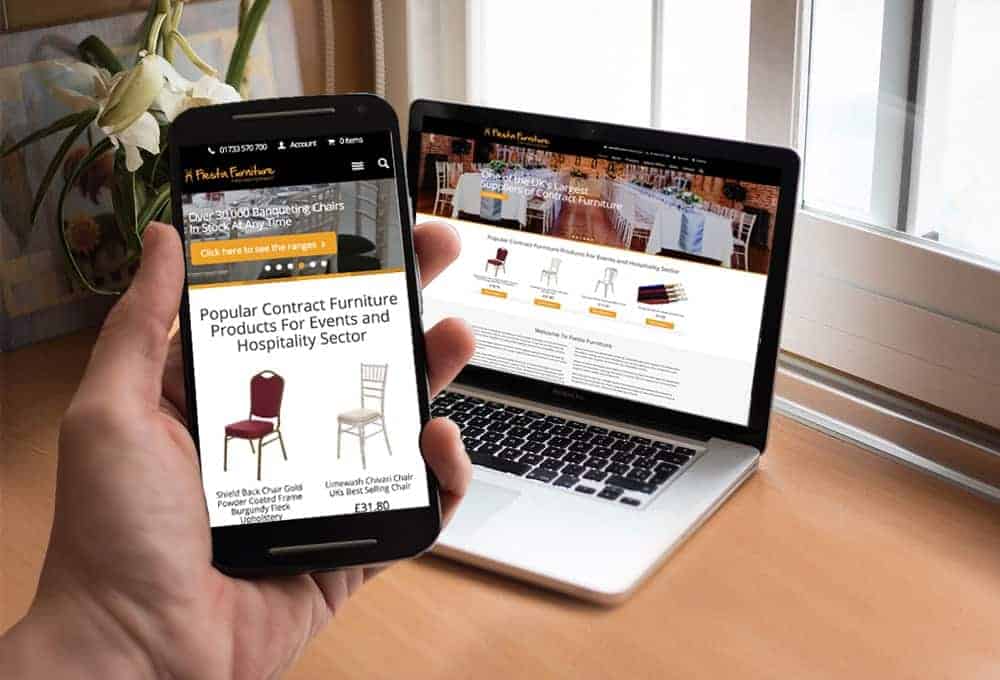
Your website or ecommerce site needs to be designed to be responsive meaning that it will work on all devices including mobiles, tablets and laptops. Our sites are
Your business website needs to be Google optimised in order for it to rank in Google. Our sites have expert SEO ( Search Engine Optimisation) built into them.
Your website needs needs to help you achieve your business objectives. With over 20 years business development expertise and our business objective led approach we can help you achieve real results.
To achieve a high quality website you need to identify the words / phrases that your customers are searching for, have great cop that engages the customer and is Google friendly, incorporates great photographs, icons and visuals. We provide a complete total service.
Reasons Customers Choose Us
Generate More Business
Having a strong online presence has never been more important. Online search is now often the first point of contact a customer will have with your business. We have 20 plus years experience of generating more business and profits for clients and helping them get proactive and noticed. We can do the same for you.
More Than Just A Great Design
We are experienced and professional marketing people (In fact Andrew Goode is a Fellow of the Chartered Institute of Marketing) not simply geeks or designers. By understanding your business, your products and services, your market and your customers we design and build new optimised websites and ecommerce sites to meet your business objectives.
No Hidden Costs
You want to know that the price you are quoted is the price you will pay. Our quotes are simple ( jargon free) , comprehensive and provided promptly so you know exactly what you will pay. Any additional work that is required will be quoted for so that you always know your costs.
Some businesses want a great looking high performing website but struggle to kickstart a project because of the perceived high costs. For this reason we offer fixed price monthly sites, whereby you can get the site you want now and pay for it in installments.













WordPress website design services that can be useful for businesses:
- Custom theme development: This service involves creating a unique design for a website using the WordPress platform. This can be useful for businesses that want a website that stands out from the competition and reflects their brand.
- Responsive design: This service involves designing a website that is optimised for different screen sizes and devices, such as desktop computers, tablets, and smartphones. This can be useful for businesses that want to ensure their website is accessible to a wide range of users.
- E-commerce integration: This service involves integrating an e-commerce platform, such as WooCommerce, into a WordPress website, allowing businesses to sell products or services online.
- Search engine optimisation (SEO): This service involves optimizing a website for search engines, such as Google, Bing and Yahoo, by using techniques such as keyword research, meta tags, and content optimisation. This can be useful for businesses that want to increase their visibility online and attract more customers.
- Content creation: This service involves creating high-quality, engaging content for a website, including text, images, and videos. This can be useful for businesses that want to establish themselves as a credible source of information in their industry.
- Security and maintenance: This service includes regular updates, backups, and security measures to ensure the website is always running smoothly and securely.
These are some of the most useful WordPress website design services, but depending on the specific needs of a business, there may be other services that are more appropriate. It’s important to choose a service provider that has experience and expertise in the specific services that a business needs, and that can work closely with the business to understand their goals and objectives.
Responsive design is extremely important for modern WordPress websites. Here are a few reasons why:
- Mobile optimisation: With the increasing number of users accessing the internet on their smartphones and tablets, it’s essential that a website is optimized for these devices. Responsive design ensures that a website adapts to the size of the screen it’s being viewed on, providing a better user experience for mobile visitors.
- Search engine optimisation (SEO): Google and other search engines are now prioritising mobile-friendly websites in their search results. Websites that are not optimised for mobile devices may be penalised, resulting in a lower search engine ranking.
- Improved user experience: Responsive design ensures that a website is easy to navigate and read on any device, making it more likely that users will stay on the site, engage with its content and return in the future.
- Cost-effective: Having a separate mobile website can be costly and time-consuming to maintain. Responsive design allows for a single website that adapts to different devices, which is more cost-effective in the long run.
- Accessibility: Responsive design also help to provide an accessible website for users with disabilities, as it allows for easy navigation and readability on different devices and screen sizes.
In short, responsive design is a must-have for modern WordPress websites as it allows for a consistent and optimised user experience across all devices, and it can also help to improve SEO, user engagement and accessibility.
Website Design Stamford
Stamford is a must visit town on any tour of England as is known as the ‘best stone town in England’. It has over 600 listed buildings of mellow limestone in the town centre including five medieval churches, it is architecturally outstanding . Sir Walter described as ‘the finest scene between London and Edinburgh’. of the Five Churches that rank cluster closely together. Burghley House, an unrivalled Elizabethan House is located on the edge of the town.
According to The Sunday Times the historic and picturesque market town of Stamford in Lincolnshire has been named as the best place to live in the Midlands, . Many would describe Stamford as “architectural eye candy”. Rankings factors, included schools, air quality, health of the high street and culture, for which judges were impressed by Stamford’s weekly market, as well as how it celebrates local independent shops. Stamford was successful in beating Stratford-upon-Avon in Warwickshire and Rutland plus Edale in Derbyshire.
Stamford statistics
- House sale data found that the average home in Stamford costs £289,950, and the average rental costs are £795 per month
- Small and micro businesses in Greater Lincolnshire employ a greater proportion of the workforce than nationally.
- Small businesses in Greater Lincolnshire were responsible for a greater proportion of job creation than nationally between 1998 and 2008.
- The population of Stamford is just over 20,000. New College Stamford provides post 16 further education.
- Tourism plays an important part in Stamford’s economy
Choosing A Website Designer FAQ’s
1. How do I know if a website designer understands the needs of a small manufacturing business like ours?
From an SME manufacturing standpoint, this is a critical concern because our requirements differ significantly from those of retail or purely digital businesses. A competent website designer should demonstrate an understanding of industrial buyer journeys, which are typically longer and more research-driven. They should be able to articulate how they will structure the site architecture to support technical product information, downloadable specifications, and clear calls to action such as quotation requests rather than simple online purchases.
Evidence of prior work with B2B or engineering-led organisations is highly relevant, particularly if they can show how they handled complex product catalogues, compliance documentation, or integration with CRM systems. It is also important that they understand search intent within niche manufacturing sectors, ensuring that the site is optimised for technical queries rather than generic consumer keywords.
2. What technical capabilities should a website designer have to ensure our site performs properly?
Beyond visual design, a professional website designer must have a solid grasp of front-end and back-end technologies. This includes proficiency in HTML5, CSS3, and JavaScript for responsive layouts, as well as familiarity with content management systems such as WordPress or more bespoke frameworks if scalability is required.
Performance optimisation is essential; they should implement efficient code practices, image compression, and caching mechanisms to ensure fast load times, which directly affect search engine rankings. Additionally, they must ensure the website is mobile-responsive, adheres to accessibility standards such as WCAG, and is secure through HTTPS protocols and regular patching.
For a manufacturing SME, the ability to integrate with third-party systems, such as ERP or inventory platforms, may also be necessary, depending on operational complexity.
3. How important is search engine optimisation (SEO), and should the designer handle it?
SEO is fundamental, particularly for manufacturers who rely on being discovered through highly specific technical searches. A website designer should at minimum implement on-page SEO best practices, including proper semantic HTML structure, metadata optimisation, clean URL hierarchies, and schema markup where applicable.
They should also ensure that the site is crawlable by search engines, with an appropriate XML sitemap and robots.txt configuration. While in-depth SEO strategy, including keyword research and link building, may require a specialist, the designer must build a technically sound foundation. Without this, even the most well-designed site will struggle to generate inbound enquiries.
4. What ongoing support and maintenance should we expect after the website is launched?
A website is not a static asset; it requires continuous maintenance to remain secure, functional, and relevant. A reliable designer should offer a structured support arrangement, which may include software updates, plugin management, security monitoring, and regular backups.
From a technical perspective, they should also provide performance monitoring and troubleshooting services to address issues such as downtime or degraded load speeds.
For SMEs with limited internal expertise, it is particularly valuable if the designer offers training on the content management system, enabling staff to make routine updates without risking site integrity. Clear service level agreements (SLAs) should define response times and the scope of support provided.
5. How do we evaluate value for money when comparing website design proposals?
Assessing value goes beyond the initial cost and requires understanding what is included in the technical and strategic delivery. A lower-cost proposal may omit critical elements such as SEO foundations, responsive optimisation, or scalable architecture, which can lead to higher costs later.
It is important to review the proposed technology stack, hosting environment, and any licensing implications. Consider whether the website is being built with long-term flexibility in mind, allowing for future expansion such as additional product lines or integration with digital marketing tools. Transparency in deliverables, timelines, and ownership of the final codebase is essential.
For a manufacturing SME, the real measure of value is whether the website can effectively generate qualified enquiries and support business growth, rather than simply serving as an online brochure.