

Measurably Great Web Design In Oakham
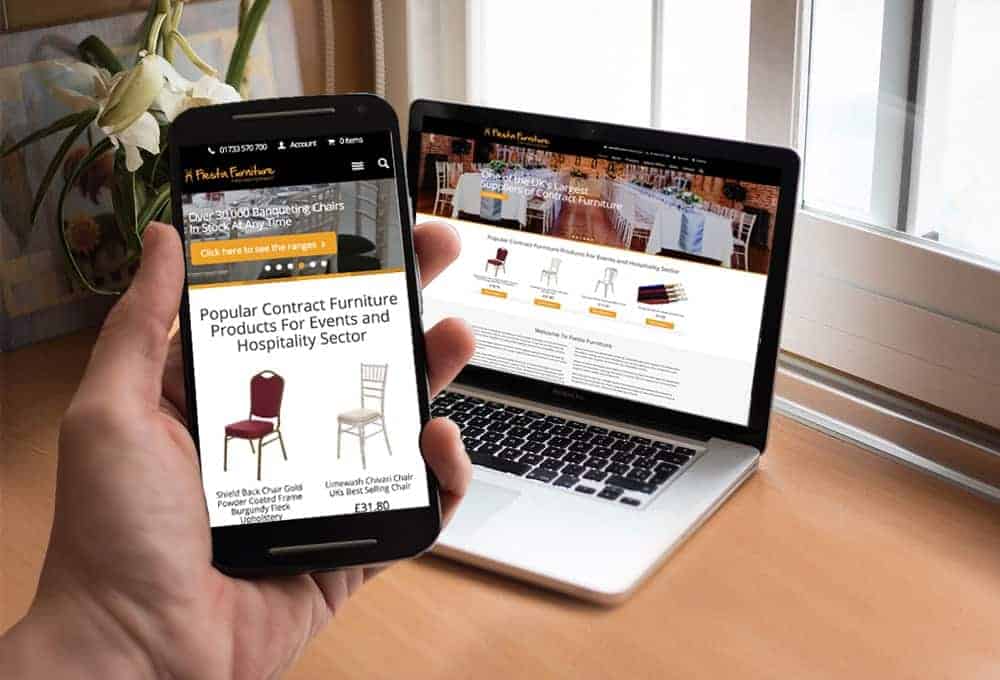
Your website needs to be designed to be responsive meaning that it will work on all devices from mobiles to laptops. Our sites are
Your business website needs to be Google optimised. Our sites have expert SEO built into them.
Your website needs needs to help you achieve your business objectives. With over 20 years business development expertise and our business objective led approach we can help you achieve real results.
To achieve a high quality website you need to identify search keywords, copywriting, great imagery, design, UX, hosting and support. We provide a complete total service.
Reasons Customers Choose Us
Generate More Business
It has never been important to have a strong online presence. We have 20 years experience of generating more business and profits for clients and helping them get proactive and noticed. We can do the same for you.
More Than Just A Great Design
We are professional and experienced marketing people (In fact Andrew Goode is a Fellow of the Chartered Institute of Marketing) not simply geeks or designers. By understanding your business, your products and services, your market and your customers we design and build new websites to meet your business objectives.
No Hidden Costs
You want to know that the price you are quoted is the price you will pay. Our quotes are simple ( jargon free) , comprehensive and provided promptly so you know exactly what you will pay. Any additional work that is required will be quoted for so that you always know your costs.














Web Design Considerations
When designing a website, there are several considerations that should be taken into account to ensure that the website is functional, user-friendly, and visually appealing. Here are some important web design considerations:
- Purpose: The first consideration is the purpose of the website. What is the website’s main goal? Is it to provide information, sell products or services, or promote a brand? The design of the website should support its purpose and help visitors achieve their goals.
- Audience: The second consideration is the target audience. Who will be visiting the website? What are their needs and expectations? The design of the website should be tailored to the target audience, ensuring that it is user-friendly and engaging.
- Navigation: The website’s navigation is a critical consideration. Visitors should be able to find what they are looking for quickly and easily. The navigation should be intuitive and well-organized, with clear and concise labeling.
- Content: The content of the website is also important. It should be clear, concise, and engaging. Visitors should be able to find what they are looking for quickly and easily, and the content should be formatted in a way that is easy to read and understand.
- Design: The design of the website is also critical. It should be visually appealing, consistent, and on-brand. The color scheme, typography, and layout should be carefully considered to ensure that they support the purpose of the website and appeal to the target audience.
- Responsiveness: With the majority of web traffic coming from mobile devices, it is important to design a website that is responsive and mobile-friendly. The website should adapt to different screen sizes and resolutions to ensure that it is accessible and user-friendly on all devices.
- Performance: Website performance is also critical. The website should load quickly, and images and videos should be optimised for web use to minimise load times. Slow load times can negatively impact user experience and increase bounce rates.
- Accessibility: The website should be accessible to all users, including those with disabilities. The design should include considerations such as appropriate contrast levels, keyboard accessibility, and the ability to use assistive technologies such as screen readers.
- Security: Security is a critical consideration for any website. The website should be designed with security in mind, with appropriate measures in place to protect user data and prevent hacking and other security breaches.
Overall, web design is a complex process that involves a range of considerations. By taking these considerations into account, designers can create websites that are effective, engaging, and user-friendly.


Measuring Website Design Performance
Measuring website design performance is an essential part of the web design process. It helps designers identify areas of improvement and measure the effectiveness of design decisions. Here are some key performance metrics to consider:
- Website traffic: Measuring website traffic is an important metric to track. It helps designers identify if the website is attracting the intended audience and if the website is being marketed effectively.
- Bounce rate: Bounce rate measures the percentage of visitors who leave the website after viewing only one page. A high bounce rate indicates that visitors are not engaging with the content or that the website is not meeting their needs.
- Conversion rate: Conversion rate measures the percentage of visitors who complete a desired action, such as making a purchase or filling out a contact form. A high conversion rate indicates that the website is effective in achieving its goals.
- Load time: Load time measures how long it takes for the website to load. Slow load times can negatively impact user experience and increase bounce rates.
- Responsiveness: Responsiveness measures how well the website adapts to different screen sizes and resolutions. A responsive website is essential to ensure that it is accessible and user-friendly on all devices.
- Usability: Usability measures how easy it is for visitors to navigate and interact with the website. A website with good usability should be easy to understand and use, with clear navigation and well-organised content.
- Aesthetics: Aesthetics measures how visually appealing the website is. Designers can measure aesthetics using surveys or user testing to determine whether the website’s design is engaging and visually appealing.
- Accessibility: Accessibility measures how easy it is for users with disabilities to navigate and interact with the website. Designers can use tools to test the website’s accessibility and identify areas of improvement.
- Security: Security measures how secure the website is from cyber threats. Designers can use tools to test the website’s security and identify areas of improvement.
By measuring these key performance metrics, designers can identify areas of improvement and make data-driven decisions to optimise website design performance
Website Design Oakham
Oakham, in the East Midlands of England is the county town of Rutland. It is centrally located 23 miles west of Peterborough, 28 miles south-east of Nottingham and 25 miles east of Leicester. It has a population of approximately twelve thousand people. Historically Oakham has attributes, it is the finishing point for The Viking Way, a 147 mile footpath which starts near the Humber Bridge in North Lincolnshire. Oakham Castle is the oldest English court building that has remained in continuous use, with trials taking place there as early as 1229. Whilst in the present day The Grainstore Brewery in Oakham holds the National Leg Wrestling Championships during their Cider & Sausage Festival in the late May Bank Holiday weekend.
Rutland interesting ( or not so interesting facts)
- Rutland’s area is 151 square miles; North to South is 16.3 miles and East to West is 16.53 miles making it the smallest county in England
- Rutland was reinstated as a county in 1997 after being absorbed into Leicestershire in 1974.
- Rutland Water is the UK’s largest man made lake, similar in size to Lake Windermere in the Lake District. It is excellent for cycling and has a perimeter of twenty three miles (including the perimeter) or seventeen miles ( excluding the peninsula)
- At the time of writing Rutland is the only county not to have a static speed camera on its roads.
- Rutland residents are known as ‘Raddlemen’.
Website Design Oakham FAQ’s
1. What information should a website for a complex electronic equipment manufacturer include?
A successful manufacturing website should go far beyond basic product descriptions. Prospective customers often require detailed information about design capabilities, manufacturing processes, quality systems, certifications, testing procedures, project management methodologies, and after-sales support.
Technical datasheets, case studies, application examples, industry sectors served, and evidence of successful deployments can all help build confidence. Because blue-chip organisations typically involve multiple stakeholders in purchasing decisions, the website should provide content that appeals to both technical and commercial audiences whilst clearly demonstrating the company’s expertise and reliability.
2. How can a website help us win more business from large corporate organisations?
A professionally designed website acts as a powerful sales and marketing tool that operates continuously. When procurement teams, engineers, operations managers, and directors are evaluating potential suppliers, they often compare several companies online before arranging discussions.
A well-structured website can highlight your technical capabilities, manufacturing facilities, quality standards, accreditations, and project successes. By presenting this information clearly and professionally, the website can help shorten sales cycles, improve enquiry quality, and increase confidence amongst decision-makers. It can also support account managers and sales teams by providing valuable resources that can be shared throughout the purchasing process.
3. Should our website focus on technical specifications or marketing content?
The most effective manufacturing websites combine both. Technical decision-makers require detailed specifications, performance data, certifications, and engineering information. However, commercial decision-makers and senior executives often focus on reliability, risk reduction, project delivery, support capabilities, and return on investment.
A professionally designed website should cater for both audiences by providing detailed technical information alongside clear explanations of business benefits. This balanced approach ensures that everyone involved in the purchasing decision can find the information they need, regardless of their role within the organisation.
4. How can a local Oakham website design company understand our highly technical products?
An experienced website design agency does not necessarily need to be an expert in electronic engineering from day one. The key is working with a team that understands how to communicate complex technical information effectively.
A good website design partner will invest time in understanding your products, applications, customers, and competitive advantages. They will translate highly technical concepts into content that is accessible to different audiences whilst maintaining technical accuracy. For manufacturers serving blue-chip clients, the ability to simplify complex information without losing credibility is often one of the most valuable skills a website design agency can provide.