

Measurably Great Web Design In Milton Keynes
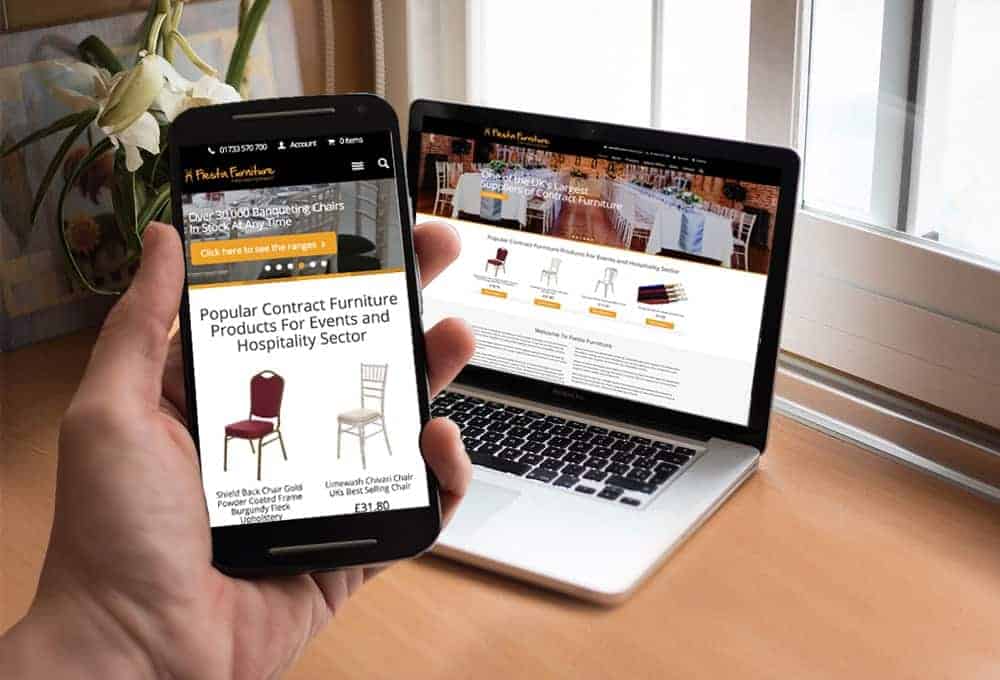
Your website needs to be designed to be responsive meaning that it will work on all devices from mobiles to laptops. Our sites are
Your business website needs to be Google optimised. Our sites have expert SEO built into them.
Your website needs needs to help you achieve your business objectives. With over 20 years business development expertise and our business objective led approach we can help you achieve real results.
To achieve a high quality website you need to identify search keywords, copywriting, great imagery, design, UX, hosting and support. We provide a complete total service.
Reasons Customers Choose Us
Generate More Business
It has never been important to have a strong online presence. We have 20 years experience of generating more business and profits for clients and helping them get proactive and noticed. We can do the same for you.
More Than Just A Great Design
We are professional and experienced marketing people (In fact Andrew Goode is a Fellow of the Chartered Institute of Marketing) not simply geeks or designers. By understanding your business, your products and services, your market and your customers we design and build new websites to meet your business objectives.
No Hidden Costs
You want to know that the price you are quoted is the price you will pay. Our quotes are simple ( jargon free) , comprehensive and provided promptly so you know exactly what you will pay. Any additional work that is required will be quoted for so that you always know your costs.













Integrating website content with social media
Integrating your website content with social media can be a valuable strategy for an SME (Small and Medium-sized Enterprise) manufacturer. Here are several reasons why this integration can be beneficial:
- Increased Visibility and Reach: Integrating your website content with social media allows you to reach a broader audience. Social media platforms have millions of active users, and sharing your website content there can significantly increase your content’s visibility.
- Drive Traffic to Your Website: Social media can act as a traffic driver to your website. When you share your website content on platforms like Facebook, Twitter, LinkedIn, or Instagram, you provide links that direct users back to your website. This can result in increased website visits and potentially more sales or inquiries.
- Enhanced Engagement: Social media platforms facilitate engagement with your audience through likes, shares, comments, and direct messages. This engagement can help you understand your audience’s preferences and interests, allowing you to tailor your website content accordingly.
- Customer Interaction and Feedback: Integrating social media with your website enables real-time interaction with your customers. They can ask questions, provide feedback, and share their experiences. This direct engagement can help you improve your products and services based on customer input.
5: Brand Awareness and Credibility: Active social media presence tied to your website content can build brand awareness and credibility. Consistent and valuable content shared on social media can establish your brand as an authority in your industry, encouraging trust among your audience.
6: Cost-Effective Marketing: Compared to traditional advertising, social media integration is a cost-effective way to market your products or services. It allows you to reach a large audience without the high costs associated with other advertising methods.
7: Cross-Promotion Opportunities: Social media integration provides opportunities for cross-promotion. You can share website content on various platforms, and if your audience engages with it, they may share it with their networks, further expanding your reach.
8: SEO Benefits: Social media signals can positively impact your website’s search engine optimisation (SEO). Sharing website content on social media platforms can lead to more backlinks, increased referral traffic, and improved search engine rankings.
Integrating your website content with social media can be an effective strategy for an SME manufacturer to increase visibility, engage with customers, drive traffic to the website, and ultimately enhance their online presence and business success
Website Design Milton Keynes
Interesting facts and information about Milton Keynes
- Milton Keynes has more bridges than Venice, now unfortunately theymay not be as picturesque as parts of Venice but the are very practical. Combined with the underpasses, they allow you to easily navigate under main roads without having to wait for the green man
- Famous for its one hundred and thirty plus roundabouts, Milton Keynes love affair with the concrete circles was never meant to be permanent. According to the plans, the iconic grid system was supposed to have traffic lights installed, but they were never fitted in the end.
- The local town of Newport Pagnell was was first mentioned in the Domesday Book of 1086. Milton Keynes even formed its eventual name from one of the old villages, known as ‘Middleton Kayne’ in the 13th century. The UK government began the regeneration of the area in the 1960s
- In Milton Keynes you are never more than half a mile from green spaces or a park. Campbell Park is one of the biggest in Milton Keynes, named after one of the its founders Lord ‘Jock’ Campbell, and hosts a range of different events throughout the year. So if you like a nice stroll around some green spaces, Milton Keynes has a variety of them on your doorstep
- The Milton Keynes concrete cows created in 1978 by Canadian artist Liz Leyh have become a bit of landmark, they now reside in MK Museum. They were crafted crafted from scrap materials donated by a local builder, and presented as a gift from the town’s development cooperation.
Website Design Milton Keynes Web Hosting FAQ’s
1. What type of hosting architecture is appropriate for our e-commerce workload?
SMEs are typically choosing between shared hosting, VPS (Virtual Private Server), managed WordPress hosting, or dedicated/cloud infrastructure.
For a manufacturing business running WooCommerce:
- Shared hosting is usually insufficient due to resource contention (CPU, RAM, I/O limits).
- VPS or cloud hosting (e.g. AWS, DigitalOcean) provides isolated resources and scalability.
- Managed WordPress hosting (e.g. Kinsta, WP Engine) abstracts server management but at higher cost.
Key technical considerations:
- PHP workers and concurrency limits (affects checkout performance)
- Object caching (Redis/Memcached)
- Database performance (MySQL/MariaDB tuning)
- Auto-scaling capability for traffic spikes (e.g. promotions or trade campaigns)
Typical SME concern: avoiding slow checkout experiences that directly impact conversion rates.
2. What level of uptime, redundancy, and disaster recovery is guaranteed?
E-commerce downtime directly equates to lost revenue and reputational damage.
SMEs should look for:
- Uptime SLAs of at least 99.9%–99.99%
- Multi-availability zone or data centre redundancy
- Automated failover systems
- Regular backups (daily minimum, ideally hourly for transactional sites)
Technical specifics to probe:
- RPO (Recovery Point Objective): How much data loss is acceptable?
- RTO (Recovery Time Objective): How quickly can the site be restored?
- Backup storage location (offsite vs same server)
Example: If a server fails during a large B2B order, poor backup strategy could mean losing transaction data entirely.
3. How is security handled, particularly for customer and payment data?
Manufacturers moving into e-commerce must treat hosting as part of their cybersecurity posture.
Key areas:
- SSL/TLS certificates (HTTPS enforced site-wide)
- Web Application Firewall (WAF)
- Malware scanning and intrusion detection
- DDoS mitigation
- Server patching and updates
For WooCommerce:
- PCI DSS compliance is critical if handling payments (even indirectly)
- Secure isolation between staging and production environments
Advanced considerations:
- Role-based access controls (RBAC)
- Two-factor authentication for admin access
- Logging and audit trails
Typical SME concern: protecting customer data and avoiding regulatory penalties under GDPR.
4. How scalable is the hosting as our business grows or traffic fluctuates?
Manufacturing SMEs often underestimate growth scenarios — e.g.:
- Expansion into new markets
- Integration with distributors
- Increased traffic from SEO or paid campaigns
Hosting should support:
- Horizontal scaling (adding more servers)
- Vertical scaling (increasing CPU/RAM)
- Load balancing
- CDN integration (e.g. Cloudflare) for global performance
Technical metrics to evaluate:
- Maximum concurrent users supported
- Server response times under load
- Elastic resource allocation
Key insight: Hosting must handle not just average traffic, but peak demand without degradation.
5. What level of technical support and management is included?
For most SMEs, hosting is not a core competency so support quality is crucial.
Questions typically include:
- Is support 24/7 and UK-based, or offshore?
- Are WordPress-specific issues supported (plugins, WooCommerce conflicts)?
- Is server management included (patching, optimisation, monitoring)?
Types of support models:
- Unmanaged hosting: lowest cost, requires in-house expertise
- Managed hosting: provider handles maintenance, security, optimisation
- Fully managed + agency support: hosting plus ongoing development support
Technical service expectations:
- Proactive monitoring (uptime, performance, security)
- SLA-backed response times
- Staging environments for safe updates and testing
Typical SME concern: avoiding reliance on a single developer and ensuring business continuity.