

Measurably Great Web Design In Sleaford
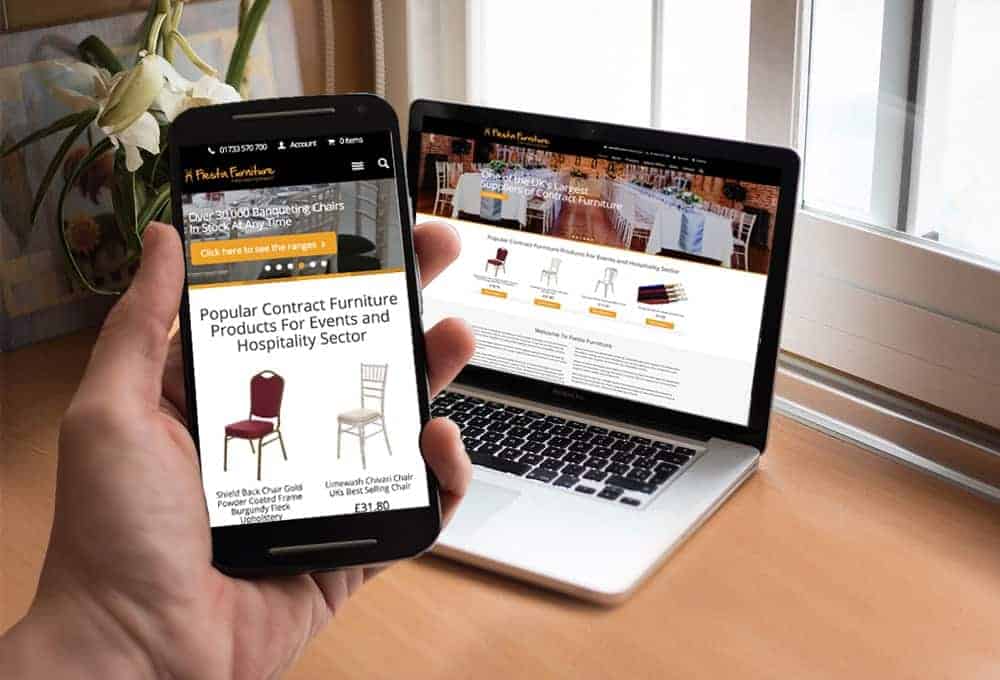
Your website needs to be designed to be responsive meaning that it will work on all devices from mobiles to laptops. Our sites are
Your business website needs to be Google optimised. Our sites have expert SEO built into them.
Your website needs needs to help you achieve your business objectives. With over 20 years business development expertise and our business objective led approach we can help you achieve real results.
To achieve a high quality website you need to identify search keywords, copywriting, great imagery, design, UX, hosting and support. We provide a complete total service.
Reasons Customers Choose Us
Generate More Business
It has never been important to have a strong online presence. We have 20 years experience of generating more business and profits for clients and helping them get proactive and noticed. We can do the same for you.
More Than Just A Great Design
We are professional and experienced marketing people (In fact Andrew Goode is a Fellow of the Chartered Institute of Marketing) not simply geeks or designers. By understanding your business, your products and services, your market and your customers we design and build new websites to meet your business objectives.
No Hidden Costs
You want to know that the price you are quoted is the price you will pay. Our quotes are simple ( jargon free) , comprehensive and provided promptly so you know exactly what you will pay. Any additional work that is required will be quoted for so that you always know your costs.













Website Design Sleaford
Interesting information and facts about Sleaford
- Perhaps unsurprisingly given its long association with the RAF (North Kesteven hosts three operational bases at RAF Waddington, RAF Cranwell, and RAF Digby) Defence Industries are playing an increasingly important part in the growth and prosperity of the district with companies like Northrop Grumman, BAE, and 3SDL creating innovative products and services competing successfully in UK and global markets.
- Unsurprising given its rural geography, over 90% its 100,000ha is devoted to agriculture, principally cereals and other arable crops with some fruit and vegetables, Food & Farming is Sleaford and North Kesteven’s biggest sector by employment and GDP. With over six million chickens providing meat and eggs for a diverse processing sector NK is also one of the largest poultry farming areas in the UK . Food processing is the largest employment sector with significant global players like Moy Park, Tulip, Noble Foods, Sleaford Quality Foods and Branston Ltd long-established and still growing in the district.
- Manufacturing and Engineering are traditional strengths of Sleaford and the Greater Lincoln area with some of the biggest names like Siemens at Teal Park or Lincat and Lincoln Precision Engineering on Whisby Road while in the south of the district Sleaford-based SHD Composites flies the flag for manufacturing with the latest composite technologies across a variety of international sectors from aerospace to automotive.
- Construction and development industries will play a key role in delivering on ambitious housing and infrastructure plans throughout the district. 15,000 new homes and 14,000 jobs plus ambitious regenerations plans Sleaford town centre will require the skills and expertise of the range of professionals with local companies like Lindum Group, Taylor Pearson, Smith’s Sports & Civils, Sleaford Building Services, Melbourne Holdings and Hodgson Bros all to the fore in helping to bring forward important housing, employment and regeneration projects.
- Up until the pandemic tourism played an important role in the rural economy. The Visitor Economy in NK was worth approximately £108M a year and supports more than 1800 FTE across a range of attractions from Countryside and Aviation Heritage with 2.2million visitors a year enjoying historic sites and buildings in the Heart of Lincolnshire. NKDC operates sites at Cogglesford Mill, Cranwell Aviation Heritage Museum and Navigation House and is currently delivering a £600,000 Stage 2 Heritage Lottery Fund to restore Mrs Smith’s Cottage which was due to reopen in April 2020 but has unfortunately been closed due to pandemic restrictions.
Website Design Sleaford FAQ’s
1. Platform Architecture & Technical Approach
Key concern: “Are we getting a robust, scalable solution—or just a quick template job?”
- Do you build bespoke themes or customise pre-built themes?
- Will the site be based on the native WordPress block editor (Gutenberg), a page builder (e.g. WP Bakery), or a hybrid approach?
- How do you handle performance optimisation (Core Web Vitals, caching, lazy loading, CDN integration)?
- What is your approach to clean code, version control (e.g. Git), and deployment workflows?
- Will the site be mobile-first and fully responsive across breakpoints?
SMEs want assurance that the build won’t become technically restrictive or slow as the business grows.
2. SEO & Digital Visibility
Key concern: “Will this site actually generate traffic and leads?”
- Do you implement on-page SEO fundamentals (meta tags, schema markup, structured data)?
- How do you ensure fast indexing and crawlability (XML sitemaps, robots.txt, internal linking)?
- Will the site meet Google’s Core Web Vitals benchmarks?
- Do you integrate tools like Google Analytics and Search Console?
- Can you support local SEO targeting for Lincolnshire businesses?
SMEs often expect at least a technically sound SEO foundation, even if ongoing SEO is a separate service.
3. Content Management & Usability
Key concern: “Can we actually manage this ourselves post-launch?”
- How intuitive is the CMS setup for non-technical users?
- Will you provide training or documentation for content updates?
- Can we easily add pages, blog posts, products, or landing pages?
- Are reusable content blocks or templates included?
SMEs prioritise autonomy, they don’t want to rely on a developer for every minor change.
4. Security, Compliance & Hosting
Key concern: “Is our business protected legally and technically?”
- How do you secure WordPress (firewalls, malware scanning, login protection)?
- Will the site be GDPR-compliant (cookie banners, data handling, privacy policies)?
- Do you offer managed hosting, and what SLAs are included?
- How are backups handled (frequency, offsite storage, recovery process)?
- Do you implement SSL and HTTPS by default?
For SMEs, downtime or data breaches can be disproportionately damaging.
5. Integrations & Business Functionality
Key concern: “Will the site integrate with our existing tools?”
- Can you integrate CRM systems (e.g. HubSpot, Salesforce)?
- Do you support eCommerce via WooCommerce if required?
- Can the site connect to email marketing platforms (Mailchimp, etc.)?
- Are there capabilities for booking systems, memberships, or gated content?
SMEs often need the website to act as an operational hub, not just a brochure.
6. Project Management & Delivery
Key concern: “Will this project be delivered on time and on budget?”
- What is your typical project timeline for a site of this scope?
- How do you structure milestones and approvals?
- Who will be the main point of contact?
- What input is required from us (content, branding, assets)?
- How do you handle scope creep or change requests?
SMEs value predictability and transparency in delivery.
7. Costs, Licensing & Ownership
Key concern: “What are we actually paying for, and what do we own?”
- What is the full cost breakdown (design, development, plugins, hosting)?
- Are there ongoing fees (maintenance, licensing, support)?
- Will we fully own the website, domain, and content?
- Are premium plugins included, and who manages renewals?
Hidden costs and unclear ownership structures are common SME pain points.
8. Maintenance & Support
Key concern: “What happens after launch?”
- Do you offer ongoing maintenance packages?
- How are updates handled (WordPress core, plugins, themes)?
- What is your response time for support issues?
- Do you provide performance monitoring and uptime tracking?
SMEs typically lack in-house technical teams, so post-launch support is critical.